Is the Task Force Implementing failed Prop. D, instead of voter approved Prop. E?
Circumvention: the Streamlining Commission Task Force “Off the Rails”
Deliberations and Democracy Are “Getting Messy”

Monette-Shaw
• • • • • • • • • • October 2025 • • • • • • • • • •
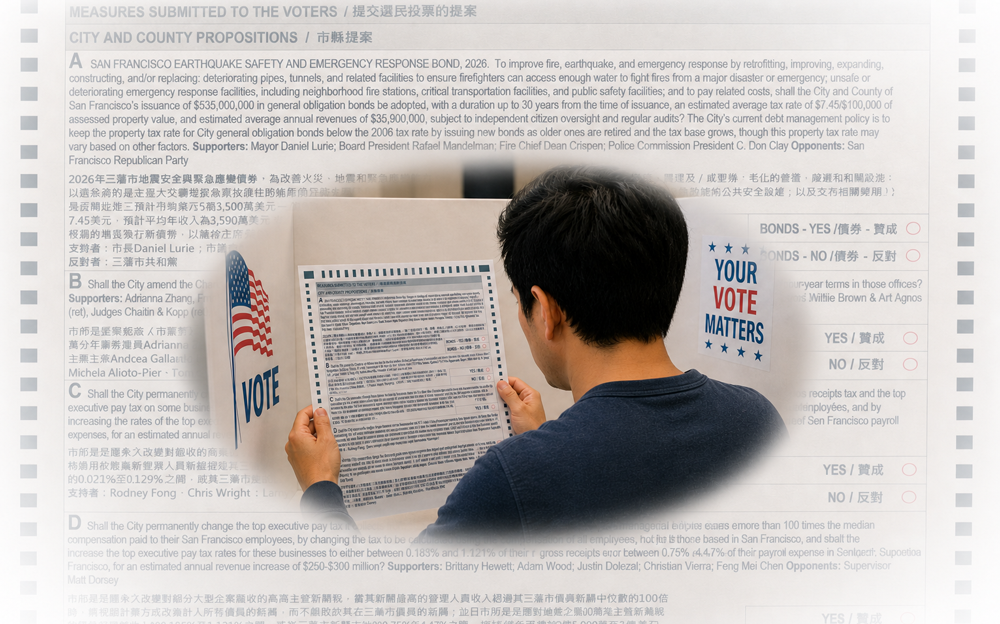
The “Commission Streamlining Task Force” mandated by Proposition E in November 2024 continues to face community concerns. Public testimony persists that the Task Force is implementing Prop. D, rejected by voters, which proposed stronger powers for San Francisco’s Mayor. The Task Force is ignoring Prop. E provisions mandating the preservation of citizen-based oversight of City Hall.
So far, the Task Force has voted to eliminate a total of 51 bodies and combine three others with other bodies, effectively eliminating 54 bodies as of October 1, which initially saves approximately $1.6 million in City expenses. If only those cost savings were true. (They actually aren’t.)
On October 15, the Task Force will consider eliminating five more bodies, combining or eliminating eight other bodies, and retaining 17 bodies when deliberating over what to do with 30 Boards and Commissions in the “Public Health and Wellbeing” policy category. And they’ll consider what to do with the final 23 bodies on November 5 in the “General Administration and Finance Category.” So far, they have not released recommendations about the fate of those committees.
The proponents and backers of Prop. D proposed wholesale elimination of 65 policy bodies, so the Task Force is well on its way to surpassing the elimination of at least 65 bodies, if not more, since it still has 53 bodies to evaluate and vote on, on October 15 and November 5. The Prop. D proponents are likely dancing in the streets. Prop. E voters? Not so much!
On October 3, Mission Local’s reporter Xueer Lu, who covers City Hall, published a terrific article titled “Prop. E was supposed to rein in S.F. mayor’s power. Instead, it’s recommending the opposite.” Although the title is a mouthful, it succinctly summarizes the concept. It is a must-read. She wrote, in part:
“Much like democracy, it [the Task Force’s deliberations] is getting messy. People who campaigned for Proposition E, which created the task force, now say that it has gone off the rails. The task force, they say, is taking up matters unrelated to its ostensible mission — and increasingly mirrors the effect of the billionaire-backed effort, Proposition D, it was created to defeat.”
Ms. Lu graduated from UC Berkeley Graduate School of Journalism with a master’s degree in May 2023.

Photo courtesy SF Examiner
Lu is right. The Task Force delved into the issue of employee discipline at the Police Department and Fire Department, which was one thing it had no business addressing. That is beyond the scope that the voters approved. Among other things, the Task Force has also inserted itself into appeals of decisions made by City Departments, necessitating the transfer of these matters to another public body to create “separation” and “neutrality.”
Lu even quotes Task Force Chair Harrington as having said that empowering the Task Force to recommend changing, eliminating, or combining City commissions does give the Task Force the ability to weaken commissions in ways that are “pretty similar to what Prop. D would have done.”
“Weakening” commissions is precisely what the Task Force is doing to hand Mayor Lurie more “strong mayor” authority. While it was supposed to be a “hedge” against a “strong mayor,” the Task Force recommends implementing the opposite.

the Task Force is wielding its chainsaw over the authority of Commissions to remove their respective Commissioners only “for cause” and handing all power to the Mayor to remove Commissioners “at will” — for no cause whatsoever.”
Chainsaw Wreckage to Date

Ms. Wu noted that “by design,” the Streamlining Task Force is stocked with representatives from various City departments. A better word is “stacked,” not “stocked,” since at least four of the current Task Force members are long-time City employees beholden to the Mayor. The fifth member — Chair Harrington — was a 30-year City employee.
That stacking was deliberate, but mainly went unnoticed by the voters. None of the five Task Force seats has real representatives from community-based organizations or voices. Critics say they are all shills for a “strong mayor.”
The wreckage they have caused so far is much broader than Ms. Lu’s assertion. The Task Force recommended removing the authority to hire the Police Chief from the Police Commission and giving the Mayor sole authority to hire and fire all five Police Commissioners.
No, it’s far worse than that. For nearly every one of the 97 bodies the Task Force has reviewed and made initial recommendations about, through its September 17 meeting, nearly all of the Boards and Commissions involved have been stripped of their ability to nominate a short-list of three nominees for their respective Department Heads. That leaves those bodies reduced to “consultative responsibilities only,” with no real guarantee the Mayor will actually seek consultative input before installing a new department head. Other bodies, not classified as “governance bodies” or “regulatory bodies,” have also been stripped of their ability to independently hire Department Heads and have been reduced to “consultative” roles.
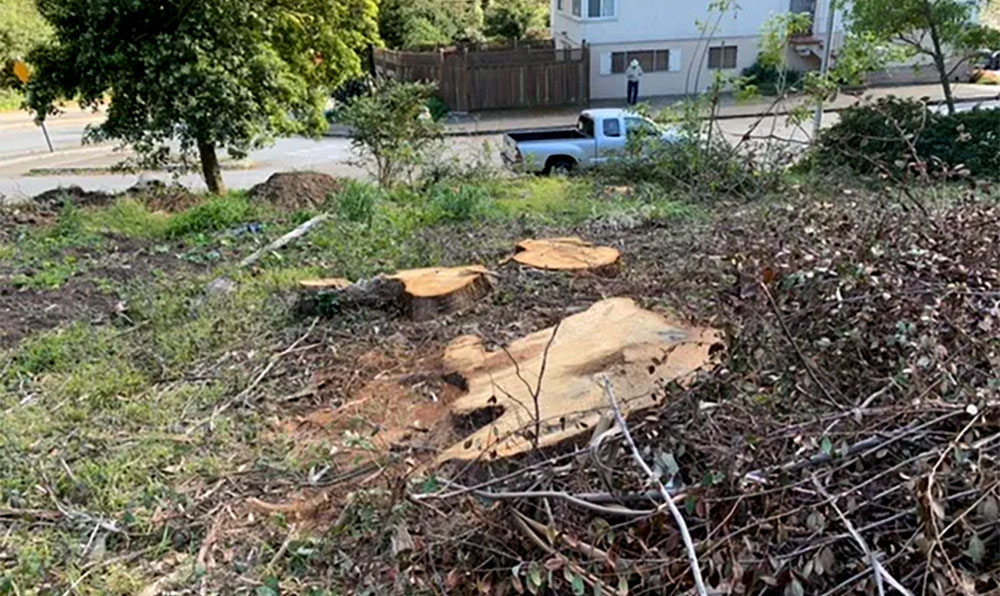
What’s more, although Ms. Lu didn’t wade into this, the Task Force is wielding its chainsaw over the authority of Commissions to remove their respective Commissioners only “for cause” and handing all power to the Mayor to remove Commissioners “at will” — for no cause whatsoever.
The Task Force is blithely content to strip away most “seat-level” qualifications for appointments to Boards and Commissions. Candidates will only need a statement from the appointing authority to indicate why a candidate is qualified. It will replace them with “body-level” qualifications that effectively strip all “seat level” qualifications — designed to provide broad community input. Nor does it require possessing specific qualifications for highly specialized Boards and Commissions, where appropriate.
The Task Force isn’t carefully analyzing how the “functions” performed by one body can be “absorbed” by another before recommending combining the two. The Budget and Legislative Analyst suggested they perform such an analysis beforehand. Instead, they have made decisions before such an analysis of actual functions. What’s worse, the Task Force has potentially assigned functions of some bodies not to another body, but to department staff. That will drastically reduce citizen involvement because City staff will be more reluctant to engage with members of the public than their previous oversight bodies were.
And the Task Force’s “Decision Log” isn’t transparently documenting which functions are being handed off to another body versus being performed by department staff.
The Task Force is wielding its chainsaw, or slingshot, by chopping Commissions out of the City Charter and plopping them into the City’s Administrative code, in a stated purpose to make housecleaning in the future much easier for a subsequent crop of City “streamlining” reformers.
The Task Force has been doing all of this, and more, despite concerns raised by community observers during their meetings. It is as if the Task Force members are tone deaf. [This may come back to bite them in the back end when the Task Force’s recommendations reach the Board of Supervisors and then the voters when the recommendations are placed on the ballot.]
Prop. D — like Trump’s Project 2025 that preceded it — has been the plan, all along. San Franciscans are being treated like chumps.
207,604 San Franciscans voted against Prop. D. It’s shameful that the Streamlining Task Force ignores the 192,540 voters who passed Prop. E. And while they vote to eliminate board, commission, and policy bodies that voters created, they exhibit a Trump-like “mandate” to impose their will and beliefs, to hand as a gift to our billionaire Mayor.
This has become a recipe for disaster—five foxes guarding the hen house.
The Early Meetings

Between February and mid-August, the Task Force spent the majority of its scheduled meetings developing purported evaluation criteria and quibbling over three main templates to assess what to do with San Francisco’s approximately 150 Boards, Commissions, and advisory bodies.
All bodies must “align” with the templates’ criteria, granting only rare exceptions. A sample of the templates, which includes the “evaluation criteria” and categorizes the information, is available here.
The Task Force settled on three main templates: one each for Governance Bodies, Advisory Committees (also known as Policy Bodies), and Appeals Bodies. The Task Force deliberately chose not to develop “templates” of criteria to evaluate “Regulatory Bodies,” even though 16 of the City’s Board and Commissions in fact have “Regulatory” functions.
The templates are a significant development, as they are not only being used to evaluate the City’s current bodies; the Task Force also hopes to “memorialize” the templates to guide the potential creation of new boards, commissions, and advisory bodies in the future. [That won’t happen until we get a new Mayor, and/or a more “progressive” Board of Supervisors!] Essentially, the templates will lock in the Board of Supervisors, and/or any City department that wants to create new bodies.
During its two meetings in August, the Task Force voted to eliminate 36 inactive and borderline-inactive bodies. Because those deliberations and voting ran long on time — while the Task Force quibbled over minutiae — they eliminated three agenda items from their published agendas when their room reservations ran out of time. Those agenda items have not been rescheduled, and likely won’t be.
On August 20, agenda item #6, a preliminary analysis overview from the Budget and Legislative Analyst (BLA) — wasn’t delivered. It was pulled off the agenda. There was no opportunity to ask questions about the BLA’s methodologies or preliminary findings. The September 1 report did not perform a proper cost-benefit analysis.
Also deleted from the August 20 meeting were agenda items #9 and #10, “Staff Working Groups” and “Legally Required Bodies,” depriving members of preliminary guidance on evaluating those types of bodies during future deliberations. They weren’t rescheduled, either.
Finally, agenda item #8 on the “Sheriff’s Department Oversight Board and the Sheriff’s Inspector General” was rescheduled for the Task Force’s September 17 meeting.
Inadequate Templates Developed
Without a separate template for “Regulatory Bodies” — they are being shoehorned into the “Governance” template for evaluations. No templates were created for evaluating Workgroup bodies and other miscellaneous bodies.
Worse, as of September 3, when it came to evaluating the Juvenile Probation Commission (JPC), the minutes reported no decision on when or how a body should be deemed a “Governance Commissions” vs. an “Advisory Body.” They couldn’t decide how to “align” the JPC to a template.
On October 1, when evaluating the Arts Commission and Building Inspection Commission, the Task Force — without understanding the implications or reviewing the specific functions of either — converted them to “Advisory Bodies” anyway.
Because the BLA’s “Financial Costs Analysis” report wasn’t presented to the Task Force during an actual meeting, the Task Force members may have missed seeing the warning to conduct a nuanced analysis of any given body’s functions before taking action.
The Task Force faced a similar problem with the “Historic Preservation Commission,” which had initially been classified as a “Regulatory Body,” voting to defer making a decision.
Task Force Progress to Date
In July to mid-August, the Task Force voted to eliminate 31 bodies identified by the City Attorney and City Administrator as being essentially “inactive.” Then it voted to eliminate another five “borderline inactive bodies,” on the pretext that they had not met frequently enough, or had problems recruiting members, affecting reaching quorums. This was done with little to no discussion of the functions, purposes, or costs.
The Task Force moved on to its first of five scheduled meetings, devoted to reviewing body-by-body what to do with the remaining 113 City bodies, beginning with its September 3 meeting, which assessed the 10 “Public Safety Bodies” category. On September 17, it considered 20 bodies in the “Infrastructure, Climate, and Mobility Bodies” category, including the SFMTA.
Its third meeting on October 1 considered the 31 “Housing and Economic Development Bodies,” including various arts and culture bodies; building and permitting bodies; economic development bodies (such as the Airport, Entertainment, and Small Business Commissions); planning and land use bodies (including the Planning Commission and Historic Preservation Commission); and workforce development bodies.
The Task Force eliminated a total of 51 of the 97 bodies on which it has made an initial recommendation. And it “combined” another three appeals bodies with the Board of Appeals, creatively categorizing them as “eliminated,” despite having been “combined.” It asserts that eliminating those combined 54 bodies will likely result in a total savings of $1.6 million. That’s completely false. There was zero savings in actual full-time staff “hard costs” savings. The entire $1.6 million was for part-time “soft costs,” which would result in zero savings according to the Legislative Analyst. Those part-time employees would likely be retained.
The Task Force has made no effort to discuss reducing City staff for part-time or full-time costs. It’s been complete radio silence.
The top table in a secondary analysis shows that 36.2% of the bodies were eliminated or combined. In comparison, 27.5% were kept, with no recommendation on what to do with the “Joint Zoo Committee,” a public-private partnership, and the “Sentencing Commission” in the Public Safety category.
$1.6 million in potential cost savings is misleading. Appendix 6 in the BLA report indicates just $73,536 in savings by eliminating those specific bodies. There may be no real net savings to the City from the $73,536 “estimate,” either.
We’ll have to see what decisions the Task Force makes on October 15 regarding the preliminary “combine or eliminate” recommendations for eight bodies.
For Westside Observer readers with the time, interest, and stamina, the Task Force’s “Decision Log“ is available on pages 14 and 15, detailing the decisions made during each of the Task Force’s meetings between July 16 and October 1.
October 1 Chopping Block
Of 31 bodies discussed during the Task Force’s October 1 meeting in the “Housing and Economic Development” policy area category, three bodies — the Abatement Appeals Board, Access Appeals Commission, and Board of Examiners — were “combined” with the Board of Appeals. [The Task Force’s “Decision Log” now creatively labels their outcome as “eliminated,” which is a misnomer and misleading.] Those three bodies, which deal with building and entertainment venue permits and licenses, will likely have to begin paying fees to file appeals with the Board of Appeals.
The seven bodies eliminated on October 1 include the Bayview Hunters Point Citizens Committee on Community Development, Market and Octavia Community Advisory Committee, and Street Artists and Craftsmen Advisory Committee, among others. The Task Force is determined to eliminate advisory bodies whenever possible, particularly “Citizens Advisory Committees” (CACs).
The Task Force kept 21 of the 31 bodies on October 1, including the Arts Commission, Building Inspection Commission, Entertainment Commission, Film Commission, Historic Preservation Commission, Planning Commission, and Rent Board, among others.
However, by applying various templates, the Task Force stripped some of these bodies of the ability to nominate and select their respective Department Heads, handing the hiring and firing authority to the Mayor. The bodies are offered a hollow “consultative responsibilities only” role. They lose their ability to provide a “short list” of three qualified nominees. Some of these bodies were yanked out of the City Charter and plopped into the Admin Code to facilitate their easy elimination in the future. Other “template” changes applied to them include enacting term lengths and term limits, as well as allowing commission members to be removed at will, rather than for cause.
All of these template-imposed changes were designed to hand the Mayor more “strong mayor” powers that Prop E voters did not want to see enacted, which is why voters defeated Prop. D.
Because the Streamlining Task Force plays fast and loose, avoiding discussion of what to do with the “functions” and duties of these bodies, San Franciscans should probably lower their expectations that promises made in previous ballot measures creating these bodies will have any meaningful oversight retained and performed with citizen-led members.
Readers interested in seeing the details of how these bodies are being significantly altered by being forced into “alignment “with the templates will have to read the 16-page (and growing) “Decision Log,” which is updated after each Task Force meeting, for specific details. Readers may also want to read the Task Force’s meeting minutes to follow other changes that may not be recorded in the “Decision Log.”
Up until October 1, Task Force members hadn’t discussed any of the costs associated with any of the bodies they had issued initial recommendations on. In fact, only once did City Administrator staff even bother to mention projected savings for just one body facing elimination — and that body was eventually retained.
Next Two Meetings
As for the remaining 54 bodies — 30 bodies in the “Health and Wellbeing” policy category, and the 23 bodies in the “General Administration and Finance” policy category — we’ll have to see if, during the Task Force’s subsequent two meetings, those bodies will face a similar split of percentages kept vs. eliminated. If the percentages hold constant, that may portend the elimination of another 19 bodies, for a total of 73 eliminated or combined, well above the 65 bodies the Prop D backers intended — lending credence to Prop E voters’ current concerns that the Prop E Commission Streamlining Task Force is wielding a Prop D-style chainsaw and sledgehammer.
The October 15 meeting on outcomes for 30 bodies in the “Health and Wellbeing” category recommends keeping 17 bodies, including the Behavioral Health Commission, Children and Families First Commission, Commission on Aging Advisory Council, Commission on the Status of Women, Health Commission, Human Rights Commission, and Disability and Aging Services Commission, and a handful of other bodies.
Many changes affecting the composition, authority, and functions of the boards and commissions noted above, which are made by applying the various templates, will also occur in the “Health and Wellbeing” bodies.
All of these template-imposed changes are designed to hand the Mayor more “strong mayor” powers that Prop E voters did not want to see enacted, which is why voters defeated Prop. D.
The other 13 bodies facing elimination or consolidation on October 15 include the Dignity Fund Oversight and Advisory Committee, the Early Childhood Community Oversight and Advisory Committee, the Homelessness Oversight Commission, the Long Term Care Coordinating Council, and the Our Children, Our Families Council, among others.
Then, in its final meeting to make body-by-body decisions, the Task Force is scheduled to review 23 bodies in the “General Administration and Finance” category on November 5. Among these bodies are the Assessment Appeals Board, Citizens’ General Obligation Bond Oversight Committee, Elections Commission, Ethics Commission, City Employees’ Retirement Board, Sunshine Ordinance Task Force, SFMTA Bond Oversight Committee, and the Commission Streamlining Task Force, among others.
Because two of the current five members of the Commission Streamlining Task Force don’t meet the qualifications to hold their respective “seats” and because this Task Force has all but eliminated “seat-level” qualifications for most other appointed members on other Boards and Commissions in favor of “body-level” qualifications, I’m placing my money on a bet the Task Force decides to eliminate the “seat-level” qualifications for seats they occupy on the Commission Streamlining Task Force! Any takers?
Task Force Member Biases
As noted, two Task Force members aren’t qualified for the seat they hold. Task Force Chair Ed Harrington, appointed by the President of the Board of Supervisors to Seat 4, was supposed to be a representative of organized labor, representing the public sector. Harrington does not have that experience. Sophia Kittler (and Jean Fraser before Kittler), appointed to Seat 5 by the Mayor, was supposed to be an “Open Government Expert” as a person with expertise in open and accountable government. Neither Kittler nor Fraser possesses that seat qualification.
Instead, Kittler’s employment experience has been in private sector development (given her master’s degree focus on private sector development) and public-sector budget management.
Perhaps on cue, just after being sworn in to replace Jean Fraser on the Commission Streamlining Task Force as the Mayoral appointee, Mayor Lurie’s Budget Director, Sophia Kittler, showed up for her inaugural Task Force meeting on September 17.
Then, Kittler went missing in action at the Task Force’s next meeting on October 1. For her part, Ms. Fraser had attended the first two of the five body-by-body deliberation meetings before suddenly resigning, claiming in her resignation letter that she couldn’t meet the time commitment to the Task Force. It will be interesting to see if Kittler is a no-show at the last two of the five scheduled body-by-body review meetings.
As noted, Task Force members have not been presented with, or assessed the functions of bodies they are deciding the fate of, before making a decision. As noted above, the BLA had warned the Task Force to conduct a nuanced analysis of any given body’s functions before taking action on combining one body with another. In classic cart-before-the-horse fashion, the Task Force isn’t assessing whether the mission that is being transferred to has the necessary bandwidth, staffing, and resources to absorb the work and functions of the body or bodies being eliminated.
When it came to the Rent Board, the Task Force had recommended that appeals of Rent Board Administrative Law Judges’ decisions be transferred to the Board of Appeals. The Westside Observer presented written testimony noting that if that had been enacted, both tenants and landlords would have faced steep Board of Appeals fees to have any appeals heard by the Board of Appeals, which they have not had to pay in the 46 years since the Rent Board was created in June 1979.
City Administrator staff claimed in its “Staff Discussion” recommendation report that the Task Force had “previously emphasized that appeals bodies should be independent from the City departments whose decisions they review.” The Westside Observer was unable to locate any records indicating that the Task Force had discussed or arrived at a consensus decision on that issue. In response to a records request placed by the Westside Observer for any such decision previously made, the City Administrator’s Office, on behalf of the Task Force, stonewalled, claiming it would respond to the records request by October 9. We’re still waiting for that response.
The claim that there is a need to create more separation and “neutrality” by forcing appeals to be independent from the City department involved is a smokescreen, perhaps made up out of whole cloth.
Thankfully, the Rent Board’s appeals process was retained in its current structure and not transferred to the Board of Appeals.
How San Franciscans Are Participating
Public participation in the Streamlining Task Force’s deliberations during meetings has been widespread. As a table compiled by the Westside Observer illustrates, during eight Task Force meetings held between March 19 and September 17, 148 people have presented oral testimony during those meetings. In addition, the Task Force has received at least 203 written letters of testimony from members of the public for 10 meetings between March 19 and October 15, almost all of them opposing drastically changing San Francisco’s Boards and Commissions’ current function.
And nearly all of the public speakers and written testimony submitted have opposed the Task Force’s efforts to weaken commissions in ways similar or identical to what the Prop D proponents and backers wanted — hand the Mayor stronger powers and dismantle citizen participation. A bare handful of letters support actions they have taken.
Between October 15 and December, when the Task Force is scheduled to develop and present its draft report and final recommendations, the public needs to get involved rapidly, if they haven’t already. You can do so by submitting written testimony to Task Force Chair Harrington and the other four Task Force members by submitting written testimony via e-mail to CommissionStreamlining@sfgov.org and to Rachel.Alonso@sfgov.org, the City Administrator’s project director, providing administrative support to the Task Force.
You can also request to be added to the Task Force’s official mailing list to receive meeting agendas in advance, and other notices. Requests to be added or removed from the mailing list should be sent to commissionstreamlining@sfgov.org.
Get involved now, before it’s too late. It’s now, or never.
A Cautionary Tale …
Proposition P in 2002 was put on the ballot to create a citizen-led “Revenue Bond Oversight Committee” (RBOC) as a watchdog over the SFPUC, which is self-regulated — which means it is effectively unregulated. RBOC was designed to close that gap and provide the public with true, independent oversight.
My Westside Observer colleague, Brian Browne, was the author of, and the primary ballot measure proponent of Prop. P. He served on RBOC for a number of years.
As of mid-2025, the SFPUC has reportedly issued over $8.5 billion in outstanding borrowing, most of which has been through revenue bonds.
Browne has shared that from the very beginning, RBOC was hijacked and run by the very people it was supposed to regulate. That hijacking was relentless. San Francisco officials apparently decided it was easier to erase the RBOC when the Board of Supervisors recommended sunsetting RBOC in January 2025, than to allow public oversight and accountability.
RBOC’s “functions” were shifted — a.k.a, “absorbed” — into SFPUC’s internal “Audit Bureau,” which holds no public meetings. That wasn’t DOGE-style reform or government efficiency. According to Mr. Browne, it was the burial of transparency, and a betrayal of the voters’ mandate, since 64% of San Francisco voters had passed Prop. P. Unfortunately, our current crop sitting on San Francisco’s Board of Supervisors gave the green light to eliminating RBOC (including former D-4 Supervisor Joel Engardio). Engardio attended the Prop D campaign kick-off launch event outside City Hall, along with State Senator Scott Wiener and Prop D proponent Kanishka Cheng.
Browne says: “This was never about efficiency. It was about hiding inconvenient truths and protecting the powerful.”
Browne says the story cannot be fully vented without details of the subversion — falsified RBOC meeting minutes, illegal maneuvers, acting without RBOC committee protocols, and the continual betrayal of the voters’ will. At age 90, he’s working on a thorough review of the hell he endured for more than eight years, because it’s time the record is set straight.
This should serve as a cautionary tale about allowing City Departments to “absorb” oversight of policy bodies. And it is a warning about might become of San Francisco’s “Citizen’s General Obligation Bond Oversight Committee” (CGOBOC) that monitors bonds put before voters. Bonds in billions of dollars fund key City infrastructure projects — everything from affordable housing bonds, to Parks bonds, the Laguna Honda Hospital and SFGH rebuild projects, and other healthcare facilities, and bonds for SFDPW’s road and street repairs.
The fate of CGOBOC will be discussed and initially decided during the Streamlining Task Force’s November 5 meeting. There were still 84 bodies to be decided following the Task Force’s September 17 meeting. Allowing oversight functions to be “absorbed” into City Departments eliminates all citizen oversight.
Bodies not eliminated by this Streamlining Task Force this go-around (next January) and are moved from the City Charter to the Administrative Code and changed from “governance bodies” to “advisory bodies” will face being assigned three-year “sunset” dates, which allow San Francisco’s Board of Supervisors to simply “sunset” those bodies at any point in the future, just as the City Supervisors did to the RBOC.
You’ve been warned, San Francisco!
The Mission Local’s Xueer Wu ended her October 3 article, noting former supervisor Aaron Peskin, who wrote Prop. E, said that whatever the Task Force comes up with, voters will get to vote on it.
She quoted Peskin: “At the end of the day, if the task force and the Board of Supervisors don’t get it right, the voters will get to decide.”
Based on the radical Prop D strong-mayor changes the Task Force has recommended so far, some voters are already prepared to reject the Task Force’s planned ballot measure, if the Board of Supervisor’s don’t reject the recommendations themselves!
Monette-Shaw is a columnist for San Francisco’s Westside Observer newspaper, and a member of the California First Amendment Coalition (FAC) and the ACLU. He operates stopLHHdownsize.com. Contact him at monette-shaw@westsideobserver.com.
October 2025