Opinion | San Francisco Politics
“Streamlining” or Power Grab?
Charter Reform Plan Threatens to Dismantle San Francisco’s Citizen Oversight System

Monette-Shaw
San Francisco’s commission streamlining push proposes Charter reform that would weaken citizen oversight, expand mayoral power, and hollow out the city’s tradition of participatory governance.
• • • • • • • • • • April 2026 • • • • • • • • • •
San Francisco’s Commission Streamlining Task Force says its mission is to make city government more “efficient.” But its sweeping recommendations — now before the Board of Supervisors — raise a far more consequential question: is this reform, or a fundamental shift of power toward the Mayor?

”streamlining“ could bring compared with SF’s budget.
A Task Force Built on “Efficiency” — or Executive Control?
San Francisco’s Commission Streamlining Task Force says its mission is to make city government more “efficient.” But its sweeping recommendations — now before the Board of Supervisors — raise a far more consequential question: is this reform, or a fundamental shift of power toward the Mayor?
The Task Force’s final report and proposed Charter Amendment, headed toward the November 2026 ballot, would significantly weaken the city’s longstanding system of participatory governance — a structure designed to balance executive authority with citizen oversight through boards and commissions.
For decades, San Franciscans have relied on this “fourth branch” of government — a network of citizen-led commissions — to provide accountability and public participation. Critics now warn that the Task Force’s proposals would dismantle that system under the guise of efficiency, replacing it with a stronger mayor-centric model of governance.
The recommendations have now landed at the Board of Supervisors, where their fate — and the future of participatory governance — rests.
Mandelman’s Mixed Signals Raise Red Flags
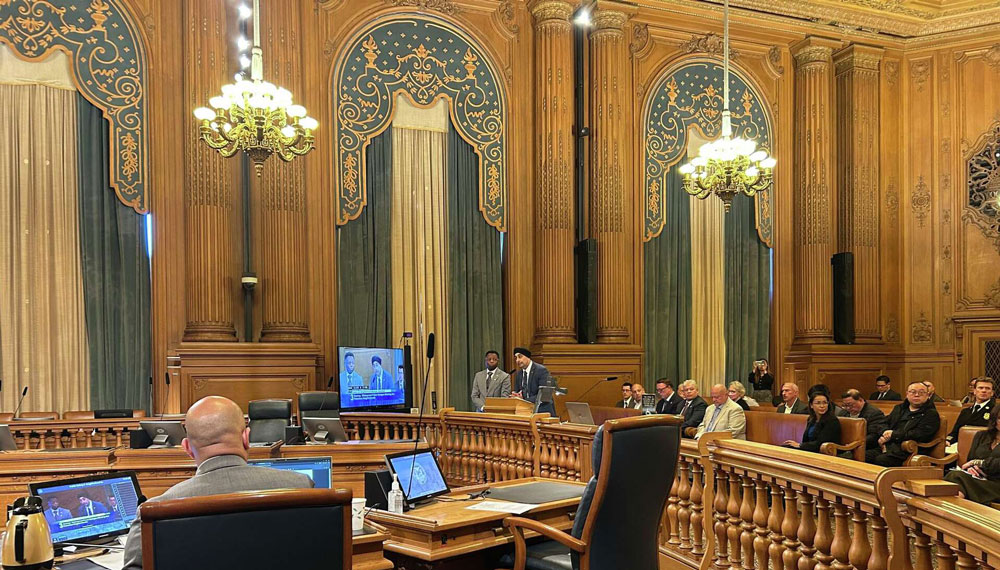
At a March 17 Committee of the Whole hearing, Board President Rafael Mandelman attempted to frame the Task Force’s work as a balanced effort to streamline government while preserving public engagement. Meanwhile, behind the scenes, observers refer to them as “steamrolling,” not “streamlining.”
Yet his remarks quickly raised concerns.
Mandelman said it was “highly unlikely” that the Board would advance the Task Force’s full Charter Amendment to voters. But he also revealed that he had already asked the City Attorney’s Office to begin drafting an alternative version incorporating unspecified portions of the proposal.
What those portions are remains unclear.
He described a “host of recommendations” as “non-controversial” and suggested there was “consensus support” for much of the Task Force’s work — despite nearly unanimous public opposition voiced during two hours of testimony that same day.
Critically, Mandelman did not define what qualifies as “non-controversial,” how much consensus exists, or which recommendations would survive.
His remarks grew more ambiguous as he referenced a “diversity of perspectives” and the “Doctor Spock-ization” of the City Charter — implying a move toward more flexible governance structures. But he then appeared to contradict that framing, saying such an approach was not what the Board or voters would ultimately pursue.
The result was confusion, not clarity — and deeper skepticism about where the Board may be heading.

What is at stake is larger than the structure of commissions alone. The broader question is who governs San Francisco: elected officials acting with fewer checks, or a system that still reserves meaningful space for citizen oversight.”
Behind Closed Doors: No Clarity on What Survives
Efforts to obtain specifics have yielded little.
In response to a public-records request seeking documentation of which Task Force recommendations were considered “controversial” versus “non-controversial,” Mandelman’s office reported that no such records exist.
Nor are there records identifying which supervisors or staff members are working on the proposed alternative Charter Amendment.
As of late March, no draft versions from the City Attorney’s Office had been produced — despite Mandelman’s statement that drafting had already begun.
This lack of transparency stands in stark contrast to the Task Force’s own process, which maintained a detailed public record of its year-long proceedings.
With the Board facing a compressed timeline — just weeks to produce a revised Charter Amendment before a reported May deadline — critics are asking how such sweeping structural changes can be responsibly evaluated without clear documentation, clear definitions, or meaningful public input.
A Quiet Push to Expand Mayoral Power
Despite public talk of modest reform, the Task Force’s recommendations point in one direction: increased mayoral authority.
Observers note that the effort echoes earlier political campaigns — including the 2024 Proposition D fight — backed by well-funded interests seeking to reshape city governance.
Organizations including SPUR and AbundantSF, along with wealthy political donors, have played visible roles in promoting “efficiency” reforms that critics say come at the expense of democratic oversight.
Mandelman himself reportedly held at least 21 meetings on Charter reform between October and January, including discussions with Task Force members and policy advocates. Details from several meetings remain redacted.
Meanwhile, figures tied to those reform efforts — including former SPUR leadership now inside City Hall — continue to shape the debate.
For critics, the concern is straightforward: “streamlining” may be less about better government than about concentrating power inside the executive branch.
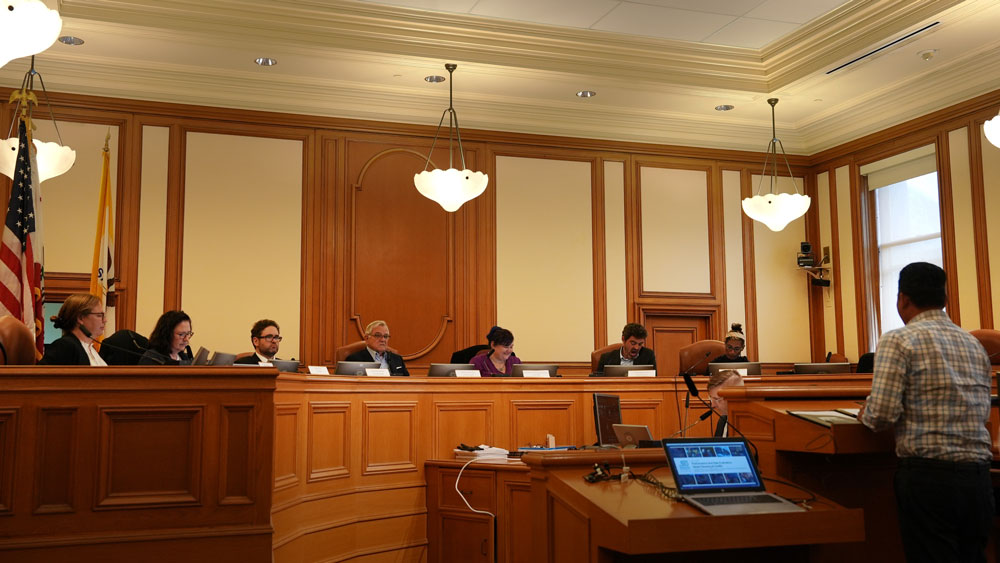
Key Commissions Targeted for Weakening or Elimination
Among the most disputed recommendations are proposed changes to some of the city’s central oversight bodies:
- Environment Commission: It would be downgraded to an advisory body, stripped of hiring authority, and potentially sunset after three years.
- Commission on the Status of Women: It would lose independence, structural protections, and key authority.
- Sheriff’s Department Oversight Board: It would see reduced independence, fewer Board of Supervisors appointees, and more mayoral control.
- Youth Commission: It would be downgraded and removed from the Charter.
More broadly, the Task Force recommends changes affecting dozens of bodies, including moving commissions out of the Charter and into the Administrative Code, removing hiring and firing authority over department heads, replacing “for-cause” removal protections with “at-will” removal, and weakening or eliminating membership qualifications.
Taken together, those changes would give the Mayor far greater influence over appointments, removals, and policy direction.
Ballot Changes That Undermine Transparency
The proposed ordinance also reaches into how voters receive information about ballot measures.
The Ballot Simplification Committee, which writes impartial digests of ballot measures for voters, would be restructured in ways critics say reduce independent oversight and make political influence over appointments easier.
Requirements that nominations come from established journalism and civic organizations would be loosened, potentially opening the door to more partisan or less independent selections.
The proposal also would eliminate voters’ ability to recall commissioners from major agencies, including the Airport, Ethics, Port, and Public Utilities commissions — stripping away a significant public accountability tool.
Ethics, Rent Control, and Oversight at Risk
Several of the proposed changes involve high-stakes areas of city government.
- Ethics Commission: Its authority to place measures on the ballot independently would be restricted, a move critics say could chill future campaign-finance reforms.
- Rent Board: Control over appointing its executive director could ultimately shift toward the Mayor, weakening the Board’s independence and raising concerns for tenants who rely on rent control protections.
- Sunshine Ordinance Task Force: Independent nomination requirements would be removed, increasing the potential for political influence over appointments.
- Disaster Council: Meeting requirements would be reduced, and after-action reporting following emergencies would be weakened or eliminated.
Critics also note that in several cases, elements included in the final proposal were not formally voted on by the Task Force in public session, raising additional concerns about process and legitimacy.
Minimal Savings, Maximum Consequences
The practical case for these sweeping changes appears weak.
A financial analysis estimated that San Francisco spends about $33.9 million annually supporting boards and commissions. But the projected direct savings from eliminating dozens of bodies were just $105,482 — a negligible amount in a city budget of this scale.
Because staff supporting many of those bodies would remain employed and reassigned to other duties, the supposed savings are limited while the structural consequences could be profound.
Critics argue the package would deliver minimal financial benefit while significantly eroding oversight, transparency, and public participation.

A Defining Moment for Participatory Democracy
The debate now shifts squarely to the Board of Supervisors, which must decide whether to advance any version of the proposed reforms to voters.
Public engagement will be critical.
Residents concerned about the proposal can submit testimony to the Board of Supervisors at bos@sfgov.org or board.of.supervisors@sfgov.org, referencing Board File #260147.
They can also monitor upcoming meeting agendas at https://sfbos.org/events/calendar/upcoming.
What is at stake is larger than the structure of commissions alone. The broader question is who governs San Francisco: elected officials acting with fewer checks, or a system that still reserves meaningful space for citizen oversight.
The answer will determine whether the city preserves its tradition of participatory democracy — or moves toward a more centralized model of power.
Author note: Monette-Shaw is a columnist for San Francisco’s Westside Observer, a member of the California First Amendment Coalition and the ACLU, and operator of stopLHHdownsize.com.
Contact: monette-shaw@westsideobserver.com
Editors Note: This is a condensed version of Monette-Shaw’s article. The expanded article is also available.
April 2026