Did Mayor Lurie strike a deal to halt a federal deployment? City watchdogs want answers.
Ever wonder what Lurie said to Trump that stopped an ICE intrusion?

• • • • • • • • February 2026 • • • • • • • •
In October 2025, San Francisco faced the possibility of an extraordinary federal intervention. After President Donald Trump publicly promised a “surge” of immigration enforcement forces to the Bay Area, city officials, immigrant advocates, and residents braced for what many feared could include military or militarized federal personnel operating in San Francisco.
The situation appeared to resolve quickly.
On October 23, Mayor Daniel Lurie announced that he had spoken directly with Trump the night before and that the president had decided to call off any federal deployment to the city. In a public statement, Lurie framed the moment as both a relief and a victory, saying he told Trump that San Francisco was recovering—tourism was returning, offices were refilling, and the city remained a global technology hub. While welcoming continued cooperation with federal law enforcement agencies such as the FBI and DEA, Lurie said that deploying the military or militarized immigration enforcement would “hinder our recovery.”
According to the mayor, Trump agreed. Lurie said the president told him clearly that the deployment was off, a decision later reaffirmed by the Secretary of Homeland Security. The mayor thanked San Franciscans for coming together and praised city leaders for unity, saying the episode showed “the best of our city.”
But what initially appeared to be a closed chapter soon reopened, as journalists and residents pressed for details about what actually happened behind the scenes.

City officials have insisted that no promises or deals were made during the call. Still, critics argue that when a mayor directly influences federal action of this magnitude, the public has a right to know how that influence was exercised.”
What Happened on the Call?
The pivotal moment was a phone call on the evening of October 22, 2025. That call, later confirmed by a calendar entry released through a public records request, lasted roughly 25 minutes. The calendar entry—the only official record of the conversation made public—reads: “7:30 pm – 7:55 pm Phone Call with Donald Trump, President of the United States re: calling off potential federal deployment in San Francisco.”
No transcript, recording, notes, or official readout of the call has been released. That absence of documentation has fueled public concern, particularly because the call came amid heightened federal rhetoric and just before Trump reversed course.
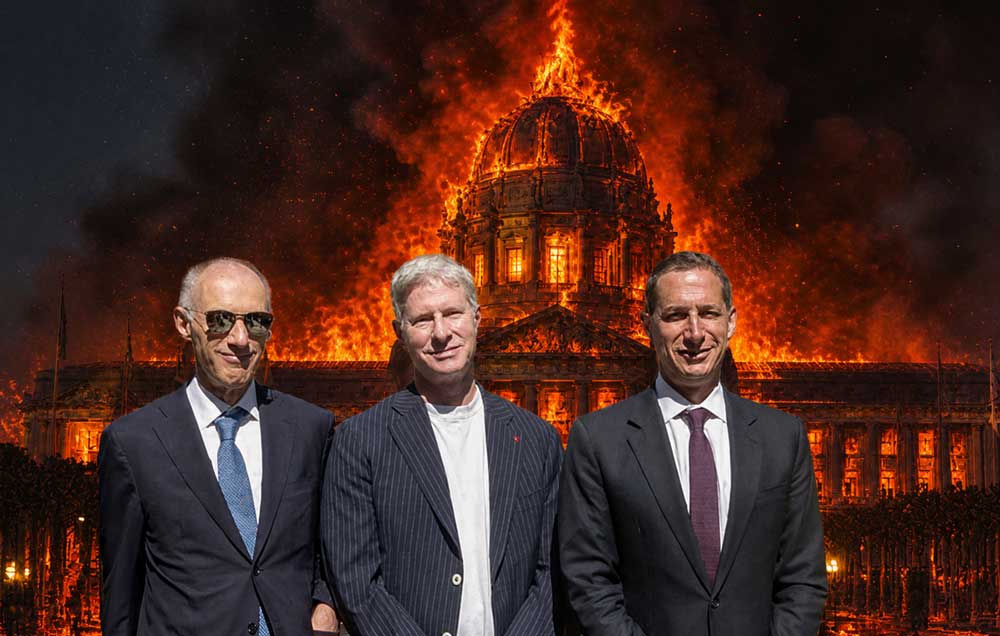
Adding to the intrigue, Mission Local reported that billionaire allies of the mayor reportedly intervened on San Francisco’s behalf before or around the time of the call. Afterward, both Lurie and Trump publicly said the president had decided to cancel the planned surge of immigration forces.
City officials have insisted that no promises or deals were made during the call. Still, critics argue that when a mayor directly influences federal action of this magnitude, the public has a right to know how that influence was exercised.
What Just Happened? Nothing to See Here!
In the days and weeks following the mayor’s announcement, multiple public records requests were filed seeking documentation related to the call and the planned federal deployment. Requesters asked for call logs, notes, emails, internal memos, communications with federal agencies, and any records showing whether the mayor agreed to anything in exchange for the deployment being called off.
The responses from City Hall were limited. The Mayor’s Office said it had no responsive records or that any existing materials were protected by attorney-client privilege. The office maintained that there were no notes, transcripts, or summaries of the call with Trump.
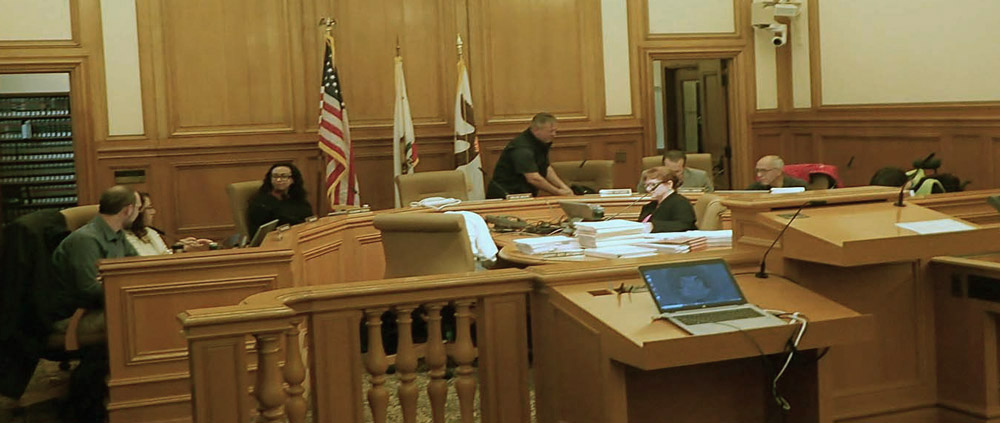
In a letter sent ahead of a key vote by the San Francisco Sunshine Ordinance Task Force (SOTF)—the city board that oversees public records laws—the Mayor’s Office said the controversy had been misrepresented. According to the letter, the only documents from that day consisted of a “legal consultation” between the Mayor’s Office and the City Attorney’s Office, along with related attorney work product.
Those documents, the Mayor’s Office said, were exempt from disclosure under attorney-client privilege. The office further argued that the unreleased records were not about the phone call with Trump itself, but about an executive directive Lurie ordered to prepare the city in case the federal deployment went forward.
“We did our most diligent effort when this request was submitted,” said Dexter Darmali, the mayoral aide responsible for handling the records request. He added that there simply were no records, aside from protected legal advice.
Sunshine Pushes Back
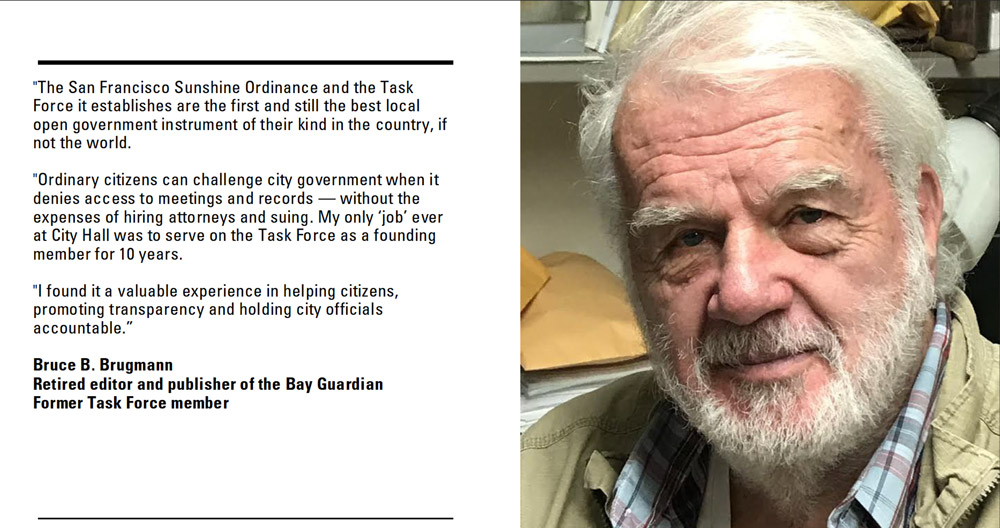
That explanation failed to persuade SOTF. In December 2025, a three-member task force committee unanimously concluded that Mayor Lurie had violated the public records law by withholding documents related to the call.
The issue then moved to the full task force. On January 7th, the body—made up of 10 voting members—voted unanimously, 9–0, that the mayor improperly withheld documents about his call with Trump. One member was absent.
The Task Force said Lurie’s office may have violated the law by applying the attorney-client privilege too broadly. While acknowledging that some records could legitimately be privileged, members said that did not justify withholding everything.
“I have to think there’s some privileged documents here,” said Dean Schmidt, an attorney who sits on the Task Force. “But I also have to think that there is—possibly, possibly, likely—documents that don’t qualify as privileged.”
Schmidt and others urged the Mayor’s Office to revisit the records request and release more information, even if heavily redacted, so the SOTF could determine whether privilege was appropriately asserted.
Task Force members grew especially frustrated over the Mayor’s Office’s initial failure to produce basic call logs, which are normally public records showing dates, times, and participants in phone calls.
Near the end of the nearly three-hour deliberation, “Do they really believe that we are that stupid?” asked Ankita Mukhopadhyay Kumar, a documentary filmmaker.
“I’m not that stupid,” added Member Maxine Anderson. She urged the Mayor’s Office to remember that it serves the public and should approach records requests “in that spirit.”
What Happens Next?
The SOTF has now referred the matter to another committee, which could determine whether the mayor’s actions constitute a “willful” violation of the Sunshine Ordinance. If that finding is made and records are still not produced, the issue could be referred to San Francisco’s Ethics Commission.
However, the power of both bodies is limited. While they can issue findings and orders, they have few direct tools to compel the Mayor’s Office to release documents.
For Mayor Lurie, the episode has become a test of transparency. Supporters argue that he acted decisively to protect the city from a disruptive federal intervention and that sensitive communications with the President inevitably involve confidential legal discussions. Critics counter that secrecy only deepens suspicion, especially when the stakes involve immigration enforcement and the use of federal power in a Sanctuary City.
What began as a brief scare over a federal deployment has now evolved into a prolonged fight over public records and accountability. As the process moves forward, the unresolved question remains the same: not just what was said on that October night—but why the public still cannot see the paper trail of one of the most consequential acts of Mayor Lurie’s tenure.
Doug Comstock is a former President of the Coalition for San Francisco Neighborhoods (CSFN) and serves as editor of the Westside Observer
February 2026