ONCE THE CITY FINDS A WAY TO TAKE YOUR MONEY, THEY WILL NEVER STOP
The Pitiful Financial Plight of the SFMTA
• • • • • • February 2026 • • • • • •

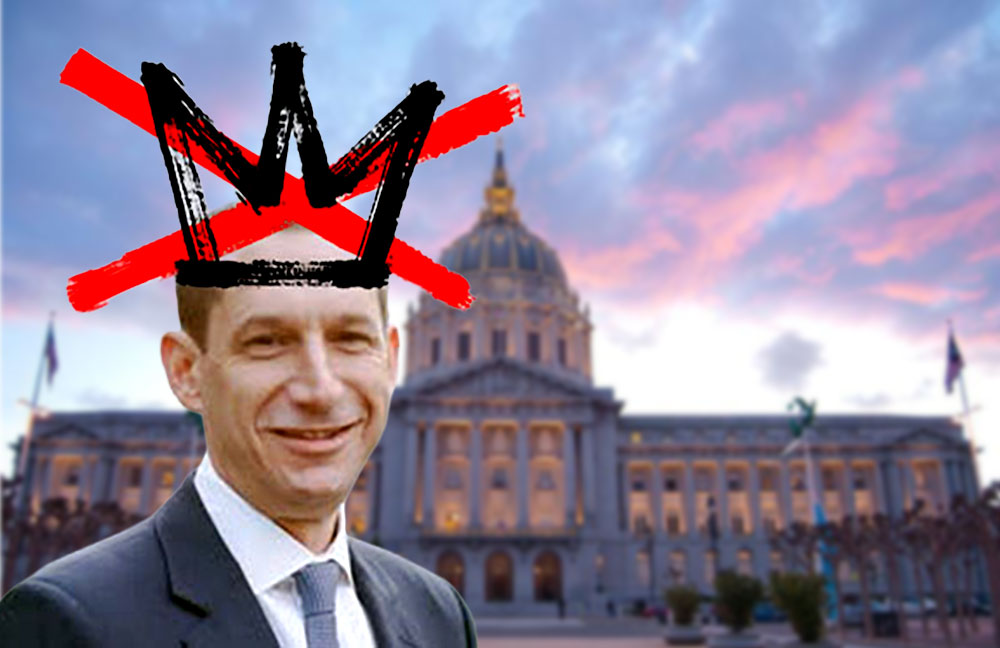
Since Supervisor Joel Engardio was recalled in September, many District Seven residents are starting to consider Supervisor Myrna Melgar the next target.
A CITY THAT NEVER STOPS TAXING
There is nothing quite like a self-inflicted financial crisis to give San Francisco politicians an excuse to treat residents like a bottomless ATM. The current situation facing the San Francisco Municipal Transportation Agency (SFMTA) is a textbook example.
The SFMTA, the Metropolitan Transportation Commission, the Association of Bay Area Governments, the Mayor’s Office, the Governor’s Office, Bay Area Rapid Transit, and Caltrans are all circling the same target: San Francisco taxpayers. We are repeatedly told that Bay Area transit must be saved. While that may be true, saving it is coming at an extraordinarily high and potentially permanent cost to residents.
Every sales tax or parcel tax is marketed as temporary, limited, or emergency-based. History tells a different story. Once imposed, these taxes quietly become permanent. Voters are worn down, misled, or frightened into extending them. Once the City finds a way to take your money, it never stops.
BUILDING A BUDGET EMERGENCY
The SFMTA has manufactured its own budget emergency. For the 2026–2027 fiscal year, the agency projects a deficit of between $307 million and $322 million, though a figure closer to $350 million is far more realistic. This shortfall is expected to grow to between $434 million and $460 million by July 2030, largely due to the exhaustion of pandemic-era federal relief funds.
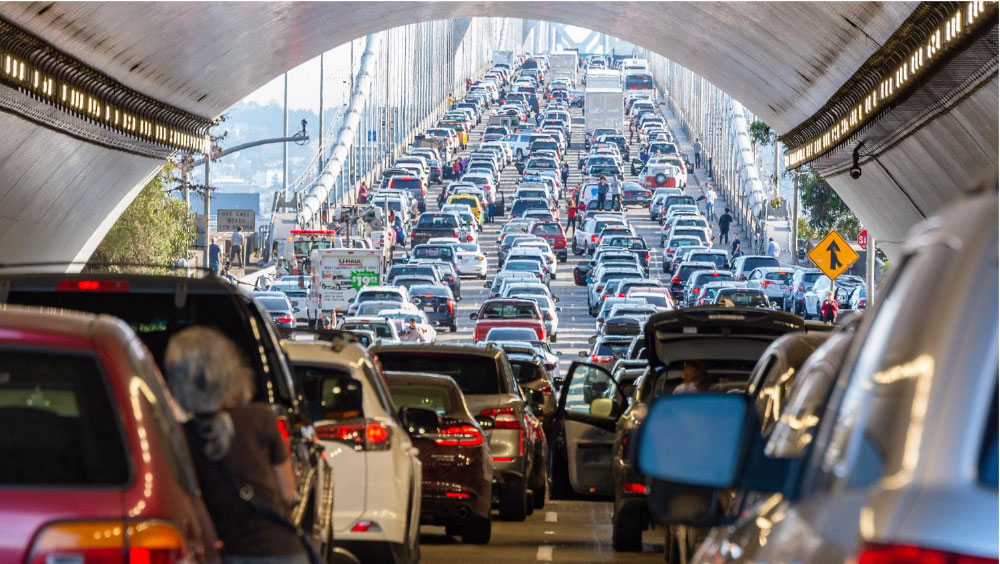
The causes are not mysterious. Ridership remains far below pre-pandemic levels, downtown activity has not recovered, federal emergency funding has expired, and General Fund revenues are declining. None of this was unexpected.

The City has also relied heavily on regressive sales taxes. Proposition B in 1989 enacted a half-percent sales tax for transportation. That tax was extended by Proposition K in 2003 and again by Proposition L in 2022, pushing its expiration to 2050. Voters were repeatedly told these measures were not tax increases. They were.”
THE REAL SFMTA BUDGET
The SFMTA’s annual discretionary operating budget is approximately $1.49 billion. Roughly seventy percent of that budget comes from external sources, including federal, state, and regional funding, as well as San Francisco’s General Fund. The City contributes a thirty-nine percent set-aside from its $6.8 billion discretionary General Fund, amounting to roughly $269 million annually, to support the agency.
MISSING THE BOAT: FEDERAL PANDEMIC MONEY
From 2018 through 2024, the SFMTA received more than $1.1 billion in one-time federal pandemic relief funds through the CARES Act, the Coronavirus Response and Relief Supplemental Appropriations Act, and the American Rescue Plan Act. These funds prevented immediate layoffs and allowed service to continue during years of dramatically reduced ridership.
However, former SFMTA Director Jeffrey Tumlin, with the support of City politicians, made a disastrous decision. Rather than adjusting service levels to reflect the collapse in ridership, the agency continued operating the bus system at near-full capacity.
Public health orders required physical distancing on transit vehicles. The SFMTA interpreted these mandates by reducing passenger loads to roughly one-third of pre-COVID capacity. To move the same number of riders would have required three times as many vehicles, something the agency could not provide. Buses routinely became overcrowded, drivers were forced to pass up passengers at stops, and standard forty-foot buses were often limited to carrying no more than twenty passengers.
While these policies were necessary during the pandemic, they financially exhausted the system. By 2025, the last of the federal relief funds had been consumed simply to partially cover the agency’s operating deficit.
GUESS HOW THE CITY PLANS TO MAKE UP THE SHORTFALL?
Rather than reforming operations, the City has chosen to extract more money from residents. Transit fares and parking fees continue to rise, with fare revenue projected to reach $125 million and parking revenue expected to approach $289 million by the 2027–2028 fiscal cycle. Cars remain both the City’s enemy and its most reliable source of revenue.
Proposition L, passed in 2024, imposed a new gross receipts tax on ride-hail and autonomous vehicle companies such as Uber, Lyft, and Waymo. The tax applies to companies earning more than $500,000 annually from trips originating in San Francisco and is expected to generate approximately $25 million per year for the SFMTA. Ironically, these competitors now outperform Muni in service quality.
THE NEVER-ENDING SALES TAX
The City has also relied heavily on regressive sales taxes. The San Francisco County Transportation Authority was created by Proposition B in 1989, which enacted a half-percent sales tax for transportation. That tax was extended by Proposition K in 2003 and again by Proposition L in 2022, pushing its expiration to 2050. Voters were repeatedly told these measures were not tax increases. They were.
In 2025, the State of California approved a $750 million loan to prevent major service cuts at Bay Area transit agencies, later reduced to $590 million. Under the current proposal, approximately thirty-one percent would go to BART, sixteen percent to Muni, and seven percent to Caltrain. At the time of writing, loan terms and repayment details remain unknown.
CAPITAL PROJECTS AND DOWNSIZED PROMISES
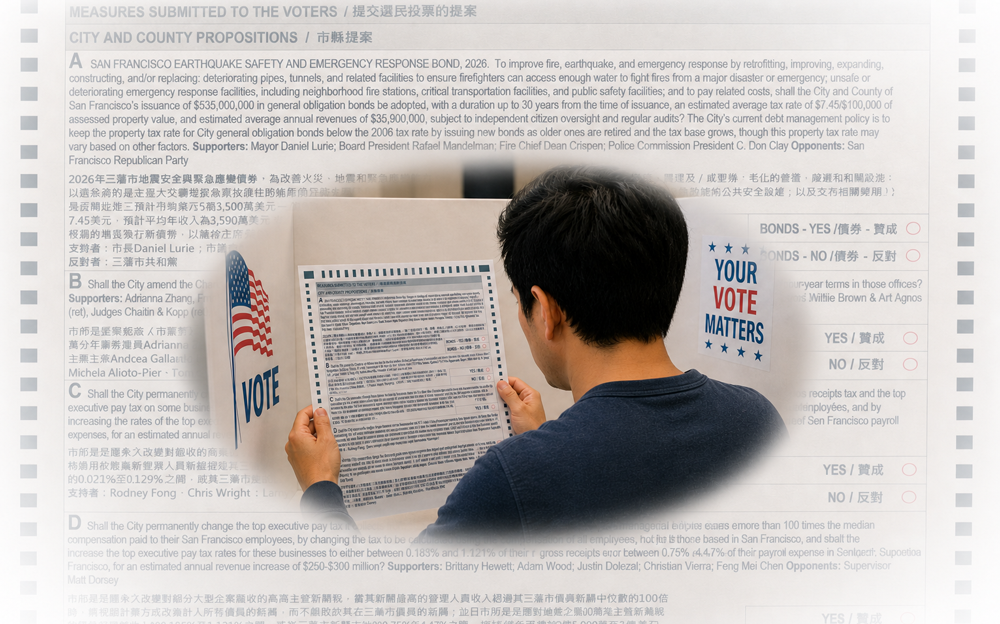
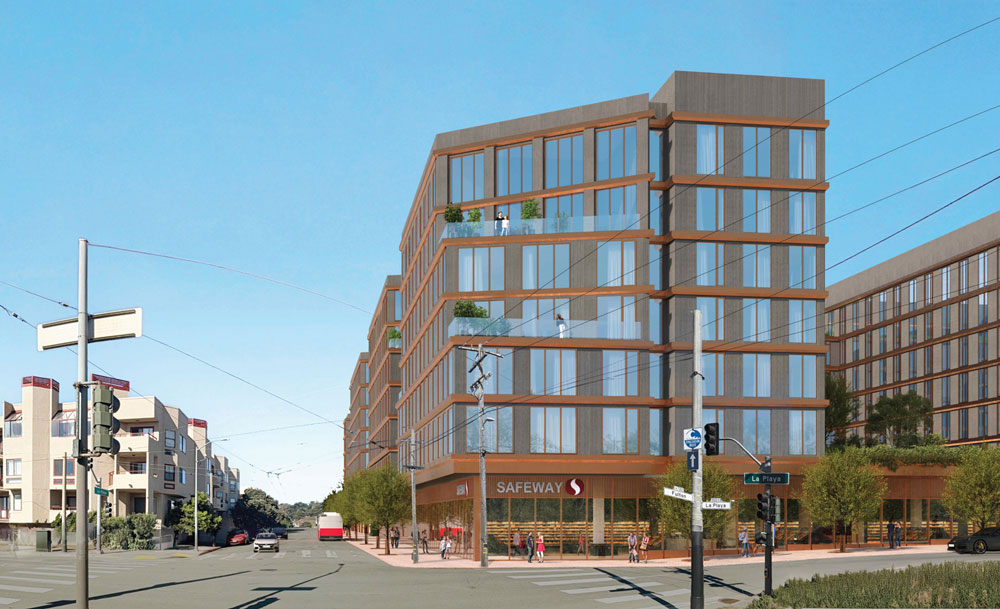
The Potrero Yard project is another example of financial overreach. It is a major component of the 2026 Earthquake Safety and Emergency Response bond, with $200 million allocated for modernization. Original plans called for more than four hundred affordable and workforce housing units above the facility. By late 2025, that number had been quietly reduced to approximately one hundred units relocated to a nearby site. The total ESER bond amounts to $535 million in new General Obligation debt.
THE MUNI PARCEL TAX
Now comes the parcel tax. Mayor Daniel Lurie has finalized a so-called progressive Muni parcel tax for the November 2026 ballot to address the SFMTA’s projected $300 million-plus annual operating deficit. The tax is expected to raise between $160 million and $183 million per year and requires only the Mayor’s approval to appear on the ballot.
Under the finalized structure, ninety-six percent of single-family homeowners would pay $129 per year, based on square footage rather than property value. Multifamily and commercial property owners would pay substantially more, with caps reaching as high as $400,000 annually. This is a fifteen-year tax. Once again, once the City finds a way to take your money, it will not stop.
A BAD-FAITH POLITICAL STRATEGY THAT WON’T END WELL
San Franciscans want to save Muni. What they do not want is to be manipulated. The regional transportation sales tax proposed for November 2026 is being advanced through a so-called citizens’ initiative to avoid the two-thirds voter approval normally required for sales taxes. Instead, the measure would need only a simple majority.
Polling shows support well below the traditional two-thirds threshold, but just enough to pass under a fifty-percent-plus-one standard. This is a fifteen-year regressive tax. History tells us exactly how this ends.
In fifteen years, expect smiling faces on glossy brochures, assuring voters that essential workers need safe ways to get to work. Let us hope that by then the SFMTA is financially sound and delivering reliable service. Experience, however, suggests otherwise.
George Wooding, Neighborhood Activist Emeritus
February 2026