The Battle over Ethnic Studies
How should Ethnic Studies be taught?

• • • • • • • • August 2025 • • • • • • • •
The 2025-26 school year was slated to be the first year when all California high schools would require students to pass a course in ethnic studies. The requirement lapsed and was unfunded in the state budget. This post reviews why schools are no longer required to teach ethnic studies, what the course is about, and the options school districts are grappling with.
There's plenty to learn from this controversy, but let's start with the basics: what is ethnic studies?
What is Ethnic Studies?
Ethnic studies is an interdisciplinary subject, which means that it involves many fields, including history, literature, economics, sociology, anthropology, and political science.
The availability of ethnic studies courses in California dates back to 1968, when college students in San Francisco staged a strike to demand "a new curriculum that would embrace the history of all people, including ethnic minorities."
As Ethnic Studies courses became increasingly prevalent in colleges, some high schools began offering it, too, as an elective class. In 2021, California became the first state to require a semester-long Ethnic Studies course to earn a high school diploma. Signed by Governor Newsom after multiple proposals and vetoes, the law appeared to demand implementation for the graduating class of 2029-30 with courses provided by no later than the 2025-26 school year… but there was a catch: The law was written in a way that made it contingent. It only goes into effect if and when it is funded. The budget for 2025-26 didn't include funding for ethnic studies, so it isn't a requirement, at least as of this writing in July, 2025.
The failure to fund the course was not an oversight. The course curriculum triggered heated controversies over what should be taught and how. A steady stream of lawsuits followed alleging discrimination, particularly antisemitism.
What is the California model curriculum for Ethnic Studies?
All classes, regardless of subject, are planned with the help of a curriculum — a written plan for what will be taught and assigned. In California, like most states, the stories of historically marginalized people have often been left out of the curriculum of many US history courses.
Recognizing this failure, California legislators in 1988 amended the California Education Code specifically to require that instructional materials include "The role and contributions of Native Americans, African Americans, Latino Americans, Asian Americans, Pacific Islanders, European Americans, LGBTQ+ Americans, persons with disabilities, and members of other ethnic, cultural, religious, and socioeconomic status groups to the total development of California and the United States."
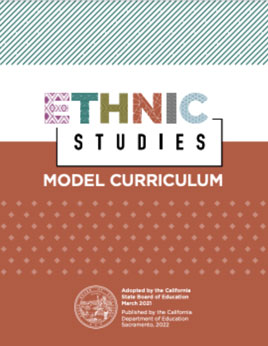
To provide teachers with direction, in 2021 the California State Board of Education adopted an Ethnic Studies Model Curriculum. Developed with public input, the curriculum focuses on four traditional subjects in ethnic studies that were first established in California higher education:
- African American studies
- Chicana/o/x and Latina/o/x studies
- Native American studies
- Asian American and Pacific Islander studies
As with any subject, ethnic studies is taught one class at a time.
In California, the authority to select curriculum lies with each school district.
In many school districts throughout California, work had begun selecting curriculum and preparing faculty members to help students learn together about America's ethnic diversity, history, divisions, and unity.
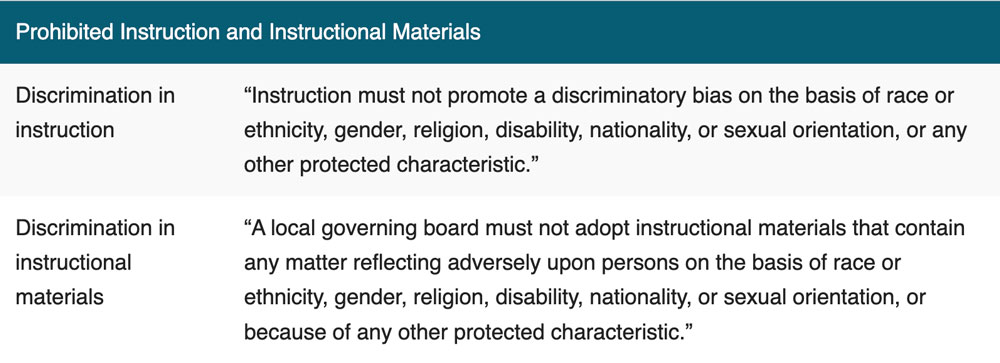
The California Department of Education advises that the process for selecting new instructional materials should be thoroughly planned, conducted publicly and well documented. In California, the authority to select curriculum lies with each school district. All curriculum, however, must comply with state law:
What’s the controversy?
Controversy swirls around the content of locally developed courses for Ethnic Studies. This is exacerbated by rising Islamophobia and antisemitism throughout the world. Ethnic studies courses explore the causes of racism and other forms of bigotry including anti-Blackness, anti-Indigeneity, xenophobia, antisemitism and Islamophobia.
The model curriculum received significant criticism during its development process. For example, The California Legislative Jewish Caucus said the draft reflected "an anti-Jewish bias." A coalition of Armenian, Assyrian, Hellenic, Hindu, Jewish, and Korean civic groups said the draft advanced "a political agenda that should not be taught as unchallenged truth in our state's public schools."
The final version of the model curriculum was modified to try to address these issues. "Try" is the operative word, though. School communities have struggled to find common ground.
Warning to school districts
Anticipating ongoing disagreements about what and how ethnic studies are taught, the ethnic studies law admonishes districts not to discriminate. Take a moment to read these guardrails because it gives you context for the controversy.

For districts that choose to use an alternative to the state's model curriculum, the law included specific advice:
"To the extent that local educational agencies, including charter schools, choose to locally develop an ethnic studies program for approval by their governing board or governing body, it is the intent of the Legislature that local educational agencies not use the portions of the draft model curriculum that were not adopted by the Instructional Quality Commission due to concerns related to bias, bigotry, and discrimination."
Governor Newsom's Education Policy Advisor has further warned school districts about using materials that do not comply with state law:
"We have been advised… that some vendors are offering materials that may not meet the requirements of AB 101 [2021-22]. Before any curriculum or instructional materials for ethnic studies courses are selected, we strongly encourage you to closely scrutinize them to ensure that they meet the requirements."
Get a feel for the controversy
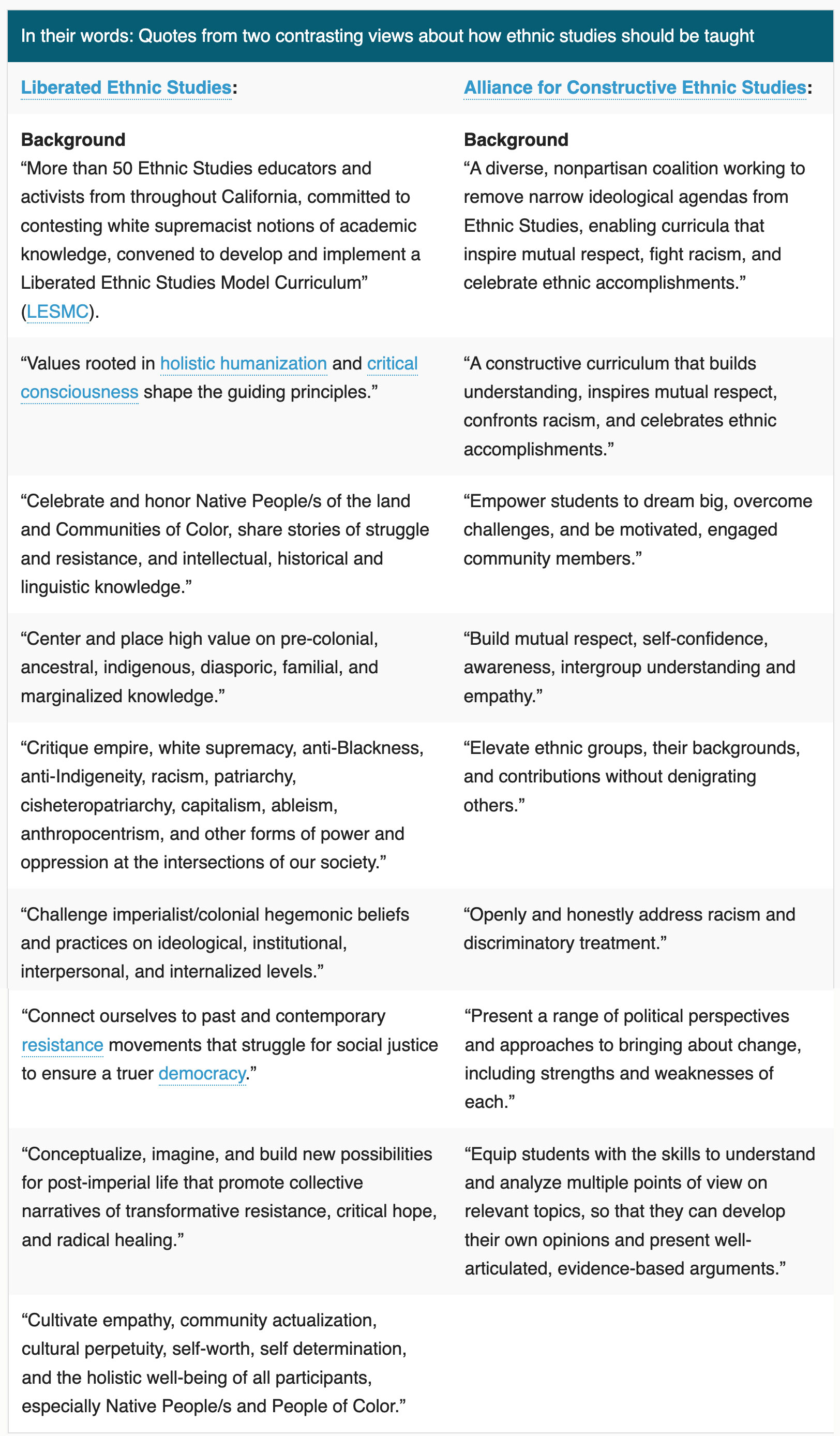
A semester course in Ethnic Studies involves many hours of discussion and interaction among students and faculty members, guided by the curriculum. The table below quotes from two organizations that have deep differences in perspective about the purpose of the course. These are not the only perspectives — just two that have attracted notable attention.
Video examples of the disagreement
It’s useful to hear the different perspectives in this debate directly. These videos help convey the sensibility and message associated with each.
Liberated Ethnic Studies testimonials:
Liberated Ethnic Studies testimonials:
Killing America movie trailer:
For a more typical example, this clip from Inside California Education is useful:
Throughout California, school districts have faced strong objections to how they are teaching Ethnic Studies and how they are protecting the rights of students to a safe school environment. This controversy increased public engagement at school board meetings and added to discussions of what and how academics should be taught in schools. For example:
- In Hayward, the district contract with the Liberated Ethnic Studies Model Curriculum Consortium was condemned, saying the model and "its leadership have arecord of promoting antisemitism, anti-Israel narratives, and other forms of bias."
- In Sequoia Union High School District, instruction about the Israel/Hamas conflict brought enraged community members to a board meeting saying a lesson contained anti-semitic propaganda.
- In Oakland and San Francisco, school districts are under investigation for civil rights violations based on discrimination complaints involving shared ancestry.
- In Los Angeles, the Deborah Project has filed a lawsuit to stop Liberated Ethnic Studies Model Curriculum Consortium materials from being used in the Los Angeles public-school system, and to enforce California law requiring that all public school teaching materials be made public."
- In Santa Ana, ethnic studies courses discussing Palestine were put on hold.
- In Berkeley, a complaint has been filed against the school district for "failing to take action to end nonstop bullying and harassment of Jewish students by peers and teachers since Oct. 7."
- In Santa Clara County, the California Department of Education determined that teachers in two San Jose-area school district ethnic studies classes engaged in discriminatory conduct against Jewish students. (May 2025)
- In San Francisco, parents complained that the lessons promoteed a narrow ideology focused on oppression and power.
Legislative response
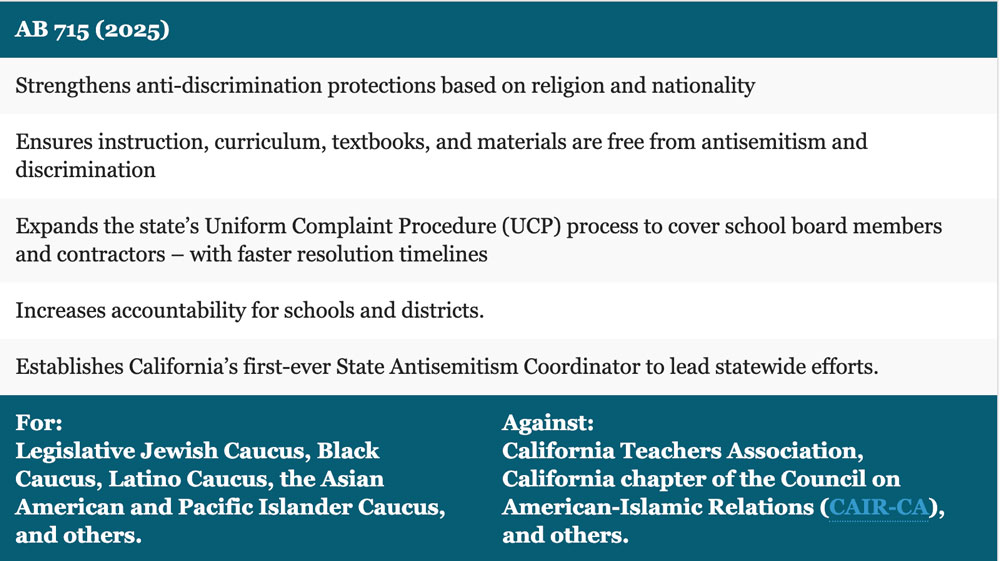
California legislators have made several attempts to rein in discriminatory material that has shown up in ethnic studies courses. As of this writing, the latest iteration is AB 715 (2025), which is expected to be discussed in committees in late summer 2025:
Carol Kocivar is a children’s advocate and lives in the Westside. Feedback: kocivarATwestsideobserver.com
Note: This article is also available at ed100.org
August 2025